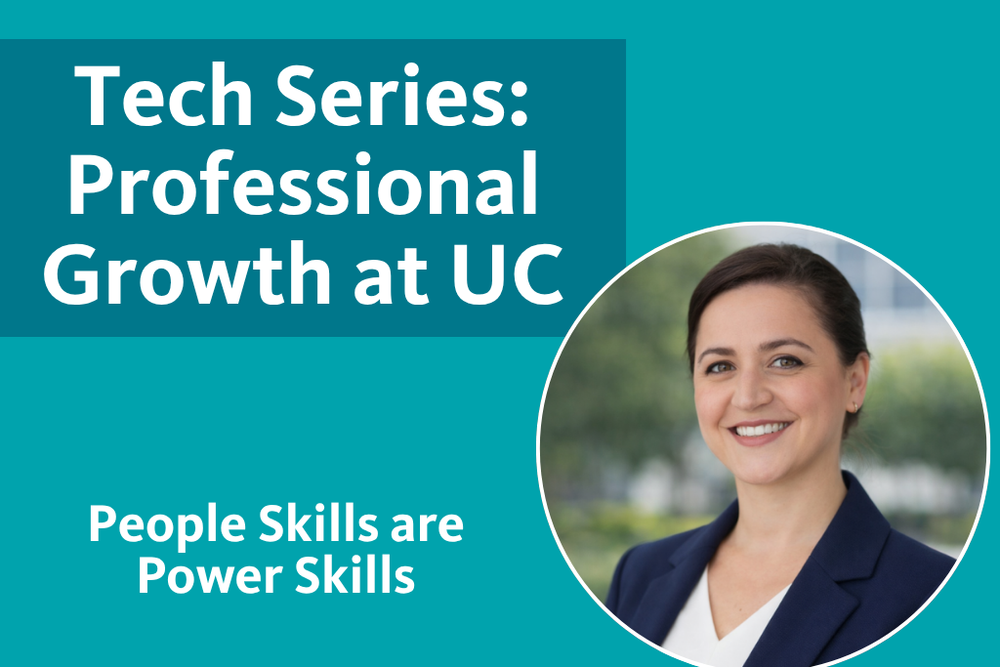
By Andrea King, Systemwide Associate Director, Talent Development
Technology work is often associated with technical expertise: cybersecurity, data analysis, programming, infrastructure, applications, and emerging tools. But technical knowledge is only part of what helps technology teams succeed.
The ability to communicate clearly, collaborate across differences, build trust, listen actively, and guide others through change is just as important. These capabilities are sometimes called “soft skills,” but many professionals now prefer the term “power skills” because they are essential to effective work—not secondary to technical skills.
For UC employees working in technology and related fields, developing people skills can strengthen collaboration, improve the user experience, and support long-term career growth.
Why people skills matter in technology
Technology rarely operates in isolation. Most projects involve people from different departments, campuses, professional backgrounds, and levels of technical experience. Successful implementation may depend as much on shared understanding and trust as it does on the tool or system itself.
Consider the many human interactions involved in technology work:
- Explaining a complex technical issue to a nontechnical audience
- Gathering requirements from people with different priorities
- Helping a team navigate a change in process or technology
- Managing competing deadlines and expectations
- Giving and receiving feedback
- Supporting users who may be frustrated or uncertain
In each situation, technical expertise is strengthened by communication, empathy, adaptability, and sound judgment.
When we connect technical decisions to institutional goals and the needs of the people we serve, we are also better positioned to influence decisions, build partnerships, and demonstrate impact.
Five power skills to practice
1. Communication
Strong communication means tailoring a message to the audience, making the purpose clear, and confirming shared understanding.
A technical expert may need to explain the same issue differently to a developer, senior leader, customer, or colleague from another functional area. Before communicating, consider:
- What does this audience need to know?
- What decision or action is needed?
- What context will help them understand the issue?
Clear communication can reduce confusion, prevent rework, and help people make informed decisions.
2. Active listening
Listening is a practical tool for solving problems. Before proposing a solution, take time to understand the concern, desired outcome, and circumstances surrounding it.
Active listening can include asking open-ended questions, summarizing what you heard, and checking assumptions. For example: “What I’m hearing is that the main challenge is not the system itself, but the time required to complete the process. Is that right?”
This approach helps uncover the real need and communicates respect for others’ experiences.
3. Collaboration
Technology projects often require collaboration across organizational boundaries. Effective collaboration means contributing your expertise while remaining open to other perspectives.
Helpful habits include clarifying roles, establishing expectations early, sharing information appropriately, and involving people with different areas of expertise.
Collaboration does not require immediate agreement. It requires people to work toward a shared goal, address disagreements constructively, and keep the work moving.
4. Adaptability
Change is a constant in technology. New tools, evolving security requirements, shifting priorities, and changing user needs can all affect how work gets done.
Adaptability is the ability to learn, adjust, and help others move forward while staying focused on the work’s purpose. You can build it by seeking context, identifying what is within your control, asking for feedback, and treating new assignments as opportunities to grow.
5. Relationship building
Trust is built through consistent actions: following through, communicating proactively, acknowledging concerns, and treating people with respect.
Strong relationships make it easier to raise risks early, ask for help, share ideas, and work through difficult situations. They are especially valuable in a campus or health center environment, where colleagues may collaborate across departments and organizational structures.
Relationship building can begin with a thoughtful follow-up, a conversation with a colleague, or an effort to understand how another team’s work connects to your own.
Turn power skills into daily habits
People skills develop through practice. You do not need to wait for a formal leadership role or major project to begin.
Choose one skill to focus on for the next month. You might ask for feedback on how you communicate, summarize key decisions at the end of meetings, or learn more about a colleague’s work. After a challenging interaction, consider:
- What worked well?
- What could have been clearer?
- What might I try differently next time?
Small, consistent changes can improve individual effectiveness and team culture.
Explore development opportunities through My UC Career
The University of California’s My UC Career platform provides tools and resources to help faculty and staff explore career possibilities, identify strengths, build skills, and plan meaningful next steps.
People skills can be part of that development plan. Use the platform to reflect on your capabilities, identify areas for growth, explore learning resources, and connect your goals to future opportunities within UC.
You can also contact your local Learning & Development group for guidance on courses, coaching, mentoring, and other resources available at your location.
Technical expertise may open the door to an opportunity, but people skills help us collaborate, lead, serve our communities, and create lasting impact. Developing both sets of capabilities helps UC employees—and the University as a whole—thrive.
Author & Contact

Andrea King, SPHR, BCBA, APTD
Systemwide Associate Director, Talent Development
About the Professional Growth Series
Our new Professional Growth series explores such topics such as mentorship, interviewing, career pathways, and learning and development opportunities, with a focus on helping employees grow, connect, and thrive across the UC system. Do you have a story to contribute to the series? Submit a UC Tech News blog intake form found here.