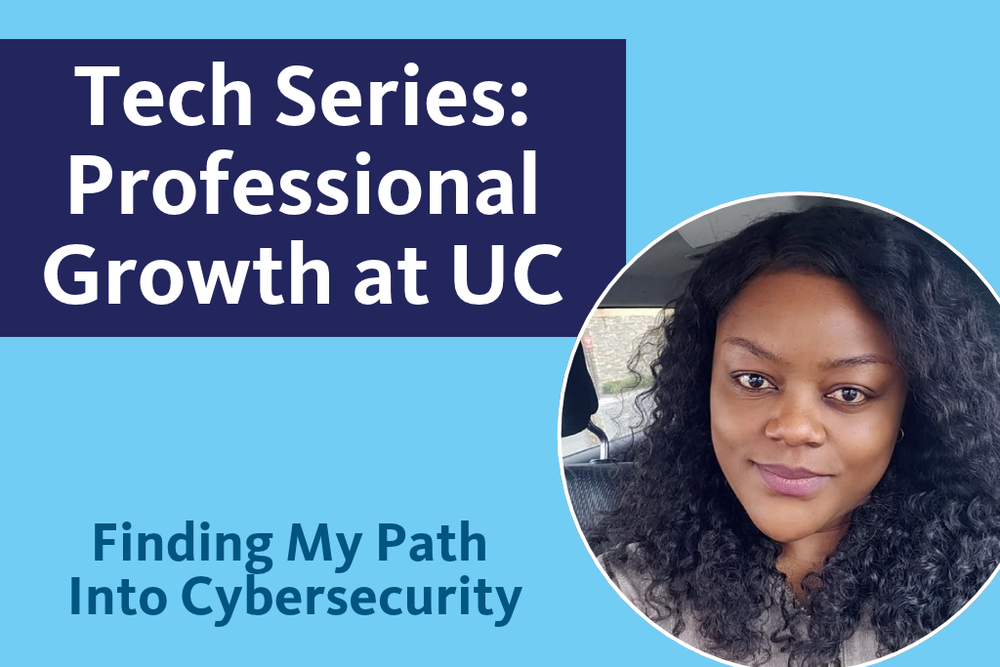
By Prisca Llewellyn, Senior IT Analyst
My career journey into cybersecurity was not something I had planned from the beginning.
My first real exposure to technology came much earlier, when I was in high school in my home country and took a course on Microsoft Office products. At the time, simply knowing how to use a computer and work with tools like Word, Excel, and PowerPoint felt very valuable and made you cool. I enjoyed learning how technology worked, but I never imagined that working with computers would one day become part of my career.
My path after that was not a straight line into cybersecurity. I worked in different non-IT-related roles and, along the way, built skills in communication, organization, coordination, and problem-solving before eventually moving into a Scrum Master role. Looking back now, I can see how those experiences helped prepare me for the work I do today, even though I didn’t see the connection at the time.
The Assignment That Changed Everything
While working as a Scrum Master, I was assigned to help gather artifacts and evidence in preparation for a security audit. I worked closely with the lead developer on the product team and other Scrum teams to identify the technical controls involved and the evidence that was needed.
That assignment really sparked my interest. I did not just want to gather documents and move on. I wanted to understand the controls themselves. Why was the control needed? Why was a certain piece of evidence being requested? What was the evidence actually proving from a security standpoint? The more I learned, the more interested I became.
Finding My Place in Cybersecurity
From there, I started researching cybersecurity. At first, I found the field a little intimidating because it seemed so broad and technical. But the more research I did, the more I realized cybersecurity has many different areas, and not every role is highly technical.
Governance, Risk, and Compliance (GRC) stood out to me because it seemed like a good fit for my strengths. I already had experience communicating with different teams, organizing information, documenting processes, solving problems, and working with both technical and non-technical people.
Once I decided GRC was the direction I wanted to pursue, I took a GRC course to build a stronger foundation. After completing the course, I started applying for cybersecurity roles.
I still had doubts. I wondered whether I was really qualified and whether I had what it took to succeed in the field. One of the biggest challenges was convincing interviewers, and sometimes even convincing myself, that I was not starting from zero. Even though I was moving into a new field, I already had transferable skills that could bring value to the role. I just needed the opportunity to use those skills in a different way and keep learning.
That first opportunity was really just the beginning. As I moved through different cybersecurity roles, I kept building on what I had learned, first understanding security and risk more broadly, then working more deeply with compliance, controls, assessments, and how organizations make decisions around risk. I also had the opportunity to work in different environments, from the private sector to government and eventually higher education. Each experience taught me something different and helped me become more confident in the path I had chosen.
Finding My Place at UC
Interestingly, I had some of those same feelings of hesitation when I considered applying to the University of California Office of the President. From the outside, UCOP felt intimidating to me. With an undergraduate degree, I assumed it was the kind of place where most people had advanced degrees, including master’s degrees and Ph.Ds., and I wondered whether someone with my background would really fit in.
I applied anyway, and I was pleasantly surprised. The people and leadership I encountered were approachable, accessible, and down-to-earth. UCOP has turned out to be one of the best places I have worked.
Today, I work in third-party risk management and vendor risk assessment. What I enjoy most is being able to see how the work I do connects, even in a small way, to the larger mission of the University of California. The work we do helps protect UC’s systems, data, and reputation while also helping make sure faculty, staff, and students have access to secure and reliable resources.
Outside of work, I enjoy refereeing soccer games on weekends or on my days off. It is something I have always enjoyed and a nice change of pace from my day-to-day work in cybersecurity.
What I’ve Learned Along the Way
One of the biggest lessons I have learned is not to let the name of a field, or even the name of an organization, intimidate you before you have taken the time to understand it.
Cybersecurity can sound overwhelming from the outside, but once you do your research, you begin to see how broad the field really is and where your own strengths might fit. You also do not have to know everything before applying for a role or trying to get your foot in the door. Have a good foundation, know enough to bring value, and be willing to keep learning as you go.
I have also learned to stay open to opportunities that may not seem important at first. My journey into cybersecurity started with one assignment: gathering evidence for an audit. At the time, I had no idea that assignment would end up changing the direction of my career.
For me, professional growth has not been about having every step figured out. It has been about staying curious, recognizing the skills I already have, taking opportunities even when I did not feel completely ready, and continuing to learn along the way.
Author

Prisca Llewellyn
Senior IT Security Analyst
UC Office of the President
About the Professional Growth Series
Our new Professional Growth series explores such topics such as mentorship, interviewing, career pathways, and learning and development opportunities, with a focus on helping employees grow, connect, and thrive across the UC system. Do you have a story to contribute to the series? Submit a UC Tech News blog intake form found here.
UC Tech News Content Survey
Do you visit the UC Tech News site regularly and/or get the monthly newsletter? If so, please take our short content survey: https://survey.alchemer.com/s3/9080340/2026-UC-Tech-News-Content-Survey