UC Tech News is excited to share the stories of the people and projects behind the winners of the 2026 UC Tech Awards.
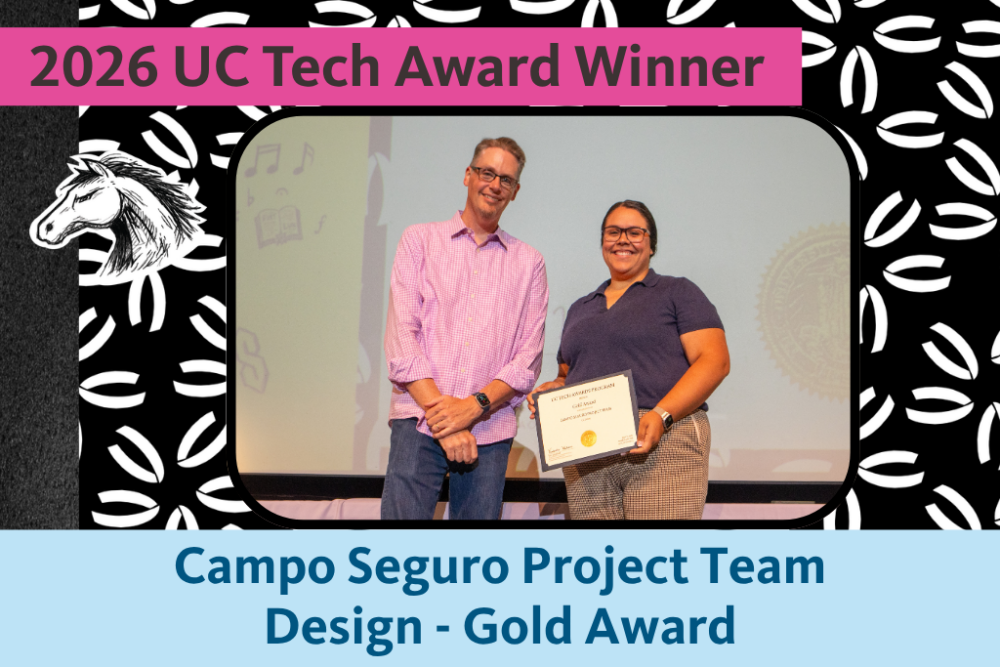
Team Name: Campo Seguro Project Team
Award Category: Design
Location: UC Davis
Team Members:
- Heather Riden, Director of Outreach, Western Center for Agricultural Health and Safety, UC Davis
- Yajaira Ramirez Sigala, Community Engagement Manager, Western Center for Agricultural Health and Safety, UC Davis
- Elizabeth Georgian, Writer, Western Center for Agricultural Health and Safety, UC Davis
- Stephanie Villanueva, Project Coordinator, Western Center for Agricultural Health and Safety, UC Davis
The Campo Seguro Project Team won the Gold Design Award at the 2026 UC Tech Awards for creating the first-ever multilingual website designed with and for farmworkers about health and safety information in an agricultural workplace.
Project Summary
California has numerous guidelines and safety best practices to improve the health and safety of the agricultural workplace, but reaching farmworkers with information about these protections can be challenging. Low literacy, limited internet access, rapid technology advancement, and the diversity of languages spoken by California’s farmworker population create barriers to both traditional and digital outreach.
To address these challenges, the UC Davis Western Center for Agricultural Health and Safety (WCAHS) created Campo Seguro, a digital education hub designed with feedback from farmworkers, community-based organization staff, agricultural employers, and state agencies. WCAHS conducted six focus groups to understand how farmworkers access, navigate, and evaluate information.
As a result, Campo Seguro was built with a mobile-first approach, high-contrast design for outdoor use, and a simple scrolling homepage based on users’ familiarity with social media. Content was made available in multiple formats and languages, with larger text and minimal clicks to reduce information overload and concerns about scams. Photos, videos, and illustrations were also made to reflect the lived reality of farmworkers and the diversity of their jobs.
By engaging partners throughout the entire development process, WCAHS created a resource grounded in the needs of the California farmworker community. This project demonstrates how an iterative and inclusive approach can make important information more accessible and useful to the people it serves.
Yajaira Ramirez Sigala, the team representative, shared some of her thoughts on the project and its impact in the Q&A below.
Was there any user feedback that stood out and led to a meaningful change in your project?
Campo Seguro was built largely based on iterative feedback from focus groups with farmworkers and community-based organizations (CBOs). Our first focus groups landed on developing a website, rather than a different form of digital resource. Participants reviewed various website styles, settling on a mobile-first, scrolling-based experience that was not overly interactive because farmworkers may only have access to the Internet via phone and CBO staff conduct outreach while on the go. Farmworkers also highlighted the need for high color contrast for visibility while working outdoors and audio content, especially for Indigenous languages. Given that the intended audience of Campo Seguro was engaged before and during ongoing development, we were able to build the website to their specifications.
What did winning this UC Tech Award mean to your team personally or professionally?
Earning the UC Tech Award has been a great recognition of the collaborative and community-engaged efforts our team has been leading at a statewide level in California.
We’re excited to share our efforts with the larger UC community and public about what is possible when farmworkers and communities are included, listened to, and engaged throughout the development of educational resources intended for them.
This recognition would not be possible without our state leaders at the Labor and Workforce Development Agency, our community partners, and the various farmworkers who trusted the UC Davis WCAHS team to bring into fruition their vision of Campo Seguro.
What’s next for this project?
We are currently developing content for additional topics that were designated priorities by farmworkers, CBOs, and government agencies. This includes accessible information on Valley fever, basic workplace safety, heat illness, and wildfire smoke. In addition, we’re preparing a promotional plan that increases Campo Seguro’s reach to more of California’s approximately 800,000 farmworkers as well as agricultural employers, advocates, and organizations.
Contact
Yajaira Ramirez Sigala, Community Engagement Manager, UC Davis